We humans are an interesting bunch. Two qualities provide real psychic paradox that often leads us to a terrible quandary. The first of these is the need to be independent. Within the first year of life, humans begin the process of individuation from our mothers, fathers, and other caregivers. The second quality is our need to fit into a group. While we assert our individuality early on, we spend most of our lives developing that identity in community.
Adolescence and early adulthood bring these two competing principles together with the expected result of immense confusion. On the one hand, young people want to assert themselves as adults, exercising new powers granted them through rites of passage like graduation from high school. On the other hand, being accepted by peers remains critical of the developing self-understanding. Rejection by peers or lovers often shatters the world of a young person. Often this need for affirmation from peers reflects association with groups that engage in highly destructive behaviors like gangs.
Much of the conflict settles in its impact when humans create families. In one sense this is the creation of one’s own community – a spouse, children, a house. Contact with an external peer group, while important, takes on less importance. But one’s professional life often goes to the building and existence of larger group – institutions. Businesses carefully craft their identities as communities with statements on vision, values, goals, and ethics. Moving “up” often requires the individual worker embody the business, inculcating these values in a human incarnation of the culture.
Something happens in this paradox of individual and the institutions of life. For too many people in these institutions, the individual loses their identity within the group-think of the organization. Indeed, a person very often becomes little more than an appendage of the institution itself. In fact, this tendency to dehumanize people is a radicalizing mark of all groups. The individual must surrender more and more of their individuality to become part of the most inner circles.
A great example in business is what happened to Enron in the early 2000’s. As people began losing their individual identities, the care and development of the company became the raison d’être of the individual worker. Even while senior leaders were committing fraud and lying about assets on their financial reports, people simply overlooked the information and assumed everything was great. And the senior leaders – the President, CEO, and executive vice presidents – squashed anyone daring to question the talking points coming from the top. Often these truth-tellers were branded as disloyal, not team players, and losers. Such is the lot of people who tell the truth: No good deed goes unpunished.
Enron was destroyed by the all-too-human tendency to associate the institution with the individual, failing to understand they are not the same. The very people within the institution that were castigated and ridiculed had the power to save it. What a tragedy.
People within institutions that are the most loyal, hard-working, and invested in success can quickly become the most abusive and violent in defense of a sick organization. The organization is everything, and if we must sacrifice a few people along the way, then that’s just the way it goes. God forbid if these people go outside the institution and make waves! In such cases, people inside the institutions often target these prophets and truth-tellers for attack and annihilation.
The reality is that we must live in community to be fully human. We need human contact and interaction with our family, friends, and neighbors. But this tendency to lose ourselves in institutions and violate our individual values and ethics must be watched and protected.
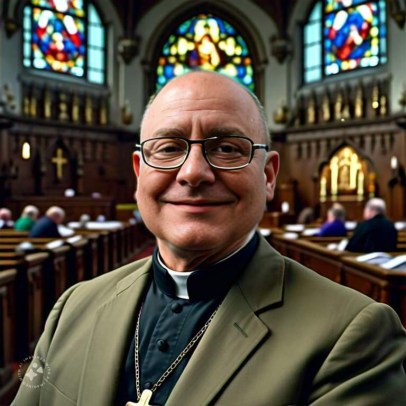
 Fr. Jim McNeely
I think this demonstrates the need for a strong commitment to a set of values and a fully solidified self-concept. Without the mooring of a commitment to universal and sacrosanct values it is easy to become buffeted along the sea of relative evaluations. But, then we must also guard against becoming adrift with the organizations from which we learned those values when they fail to be moored to them. That is why the teachings of a Church must always be more important than the organizational health. A small Church that preaches and practices it’s pure faith is a greater source of safe harbor than a large and prosperous one that has corrupt leaders.