
The United States suffers from two massive frauds: Federal government tyranny and the ease in which couples divorce and destroy their families. I’m rather infamous for bloviating about the first, but not nearly enough to lambast the latter.
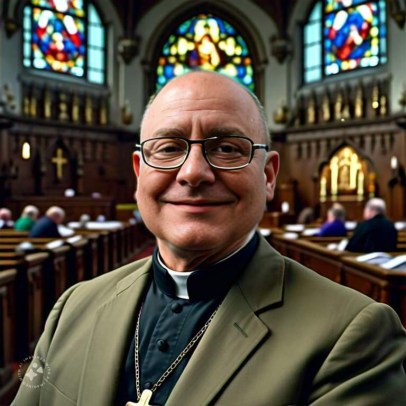
Before diving in, there’s a few things to clear up from the beginning. I’m a twice divorced person, though in both cases, my wives sought the divorce over my strenuous objections. In addition, the vocational pursuit of my life has been Christian ministry. My current denomination (The International Communion of the Charismatic Episcopal Church) has a very specific rule about divorced clergy that I’m vowed to support. Finally, I am a student of the Bible…not just the texts themselves, but also the cultural backgrounds of those sacred writings that help us understand the intentions of the authors.
Divorce in the ancient world was a reflection of the patriarchy. Women had no power over who they married – their parents arranged that. As a result, divorce was a rare occurrence. Generally, the man was the only person empowered to divorce his wife, though there were exceptions to this rule, especially in European empires like the Greeks and Romans.
Divorce laws in Western civilization changed as marriages became the choice of the partners and family influence over these unions waned. By the mid-1800’s, women could freely divorce their husbands, but only under certain conditions like repeated adultery, physical abuse, or abandonment. This was further changed in the 1900’s when “no fault” divorce laws allowed either party to divorce for any reason at all.
The divorce rate in the United States in 1900 was around 8% according to a Valerie Schweitzer, a researcher from Bowling Green State University. When the “no fault” divorce laws began to affect couples, the divorce rate was at 9%. Within 40 years, that rate spiked to 52%. The current rates (according to the study from 2018) are around 45% in rough numbers.
The historic church developed rules about the clergy over the centuries from the time of the Apostles based on several factors: Judaism’s practices, the teachings of the Old and New Testaments, the current laws of the geographical areas, and the practices of the church in the business of marriage and family life. In the early church, there was nothing specific mentioned about leadership’s familial status, but the Apostle Paul made several important rules that exist in his letters to this day.
The general practice of the church in the Medieval centuries was for a member of the clergy to be male (yes, there were female clergy but that’s for another time…) and have one wife. Tradition has suggested that this meant a man could only have one wife in his lifetime. So if a deacon’s wife died or he divorced her, he must remain single or lay down his orders. This was true for bishops and presbyters as well.
This practice continues today in the Eastern Orthodox tradition and Roman Catholic in those extremely rare conditions where their priests are married and their deacons (who are allowed to be married as a matter of canon law).
But is this tradition the correct or the best reading of those texts concerning, “the husband of one wife”? I say no for two important reasons: The texts are rather clear in how they are written that the issue is not one wife throughout the life of the man, but rather he cannot more than one wife at a time. Second, the sacred tradition of the Church was dealing with a whole different set of circumstances than we have in current society. For example, a divorced presbyter at the time (unless he was married to a Roman citizen for a wife) must have been the divorcing party…and that was an arranged marriage, which meant their were political ramifications behind the divorce.
There is a pastoral concern that the current practice does not address. Divorce.com says that women initiate divorce in 70% of divorces. That number rises to over 90% when the wife has a college degree. To a large degree, women are now the initiators of divorce, which may explain why the divorce rate is so high in Western Society.
The fathers of the Church created a system that worked for centuries in a world where the conditions were different. Do we really think that our forebears wanted a system where a cleric’s wife could divorce him for any reason, which necessarily ended that cleric’s ministry?
In my next blog entry, I will discuss the remarriage of divorced or widowed clergy…and why forcing clergy to be single can be very dangerous.
 Fr. Jim McNeely